Contents:
- Why Roses Need Companion Flowers
- The Best Flowers That Go With Roses in a Bouquet
- Baby’s Breath (Gypsophila)
- Eucalyptus
- Peonies
- Lisianthus
- Ranunculus
- Lavender
- Waxflower
- Pairing by Rose Color: A Practical Guide
- Red Roses
- Pink Roses
- White Roses
- Yellow Roses
- Common Mistakes to Avoid
- A Sustainability Note: Choosing Eco-Friendly Companion Flowers
- Where to Buy Companion Flowers in the US
- Practical Tips for Assembling a Rose Bouquet at Home
- FAQ: Flowers That Go With Roses in a Bouquet
- What is the most popular flower to pair with roses?
- Can you mix peonies and roses in the same bouquet?
- What greenery goes best with roses?
- How many filler flowers do I need per rose?
- Do lavender and roses go together in a bouquet?
- Build Your Bouquet With Confidence
Roses don’t need help being beautiful. But a bouquet of roses alone? That’s a monologue. The most breathtaking arrangements — the ones people photograph at weddings, keep on their kitchen tables for weeks, and can’t stop talking about — are conversations between flowers. Knowing which flowers go with roses in a bouquet is the single skill that separates a grocery store grab from a florist-worthy design.
This guide is for complete beginners. No prior flower knowledge required. By the end, you’ll know exactly what to put alongside your roses, why it works, and how to avoid the mistakes that make bouquets look amateur.
Why Roses Need Companion Flowers
Roses are structurally bold — large, round blooms with dense petals. When you cluster several together, the eye gets tired fast. There’s no visual rhythm, no contrast, nowhere to rest. Companion flowers solve this by adding three things roses lack: filler texture (small, airy blooms that fill gaps), foliage (greenery that makes colors pop), and accent blooms (medium-sized flowers that balance the rose’s dominance without competing with it).
Professional florists typically follow a rough formula: 30–40% focal flowers (roses), 20–30% accent blooms, and 30–40% filler and greenery. That ratio produces bouquets that feel intentional rather than thrown together.
The Best Flowers That Go With Roses in a Bouquet
Baby’s Breath (Gypsophila)
The classic pairing, and for good reason. Baby’s breath creates a cloud of tiny white blooms that make roses look more luxurious by contrast. A single bunch — usually $4–$6 at most US grocery stores — can stretch across an entire mixed bouquet. It’s also one of the longest-lasting cut flowers, often surviving 10–14 days in a vase.
Eucalyptus
Silver dollar eucalyptus is the most popular variety for bouquets. Its dusty blue-green leaves add an organic, slightly wild quality that softens the formality of roses. It also smells incredible — a light camphor-mint scent that complements floral perfumes without overpowering them. Expect to pay around $8–$12 per bunch at a florist.
Peonies
Peonies and roses are the power couple of the floral world. Both are lush and romantic, but peonies have a looser, ruffled structure that contrasts beautifully with a rose’s tighter spiral. They’re seasonal — peak availability runs May through June in the US — but when you can get them, the combination is unmatched for weddings and anniversary bouquets.
Lisianthus
Often called the “poor man’s peony,” lisianthus offers layered, ruffled petals in purple, white, and blush tones. It’s an ideal accent flower because its soft, open shape creates breathing room around the denser roses. At $5–$9 per stem, it’s more affordable than peonies and available year-round.
Ranunculus
Ranunculus are button-shaped blooms with hundreds of paper-thin petals. They come in nearly every color imaginable, making them one of the most versatile accent flowers. Their compact size — typically 1.5 to 3 inches across — pairs naturally with medium and large rose varieties without competing for attention.
Lavender
Dried or fresh, lavender adds a vertical spike element that a bouquet full of round blooms desperately needs. French lavender stems average 12–18 inches and introduce a soft purple tone that complements pink, cream, and white roses especially well. It also dries beautifully if you want your bouquet to last beyond the typical vase life.
Waxflower
Tiny, star-shaped blooms on woody stems, waxflower is a filler flower with a delicate, heather-like texture. It lasts up to 14 days as a cut flower — longer than almost anything else on this list — and adds a wildflower looseness to formal rose arrangements.
Pairing by Rose Color: A Practical Guide
Red Roses
Pair with white lisianthus, dark green eucalyptus, or deep burgundy ranunculus. The contrast of red against white creates a crisp, classic look. Avoid mixing red with pink — the tones often clash rather than complement.
Pink Roses
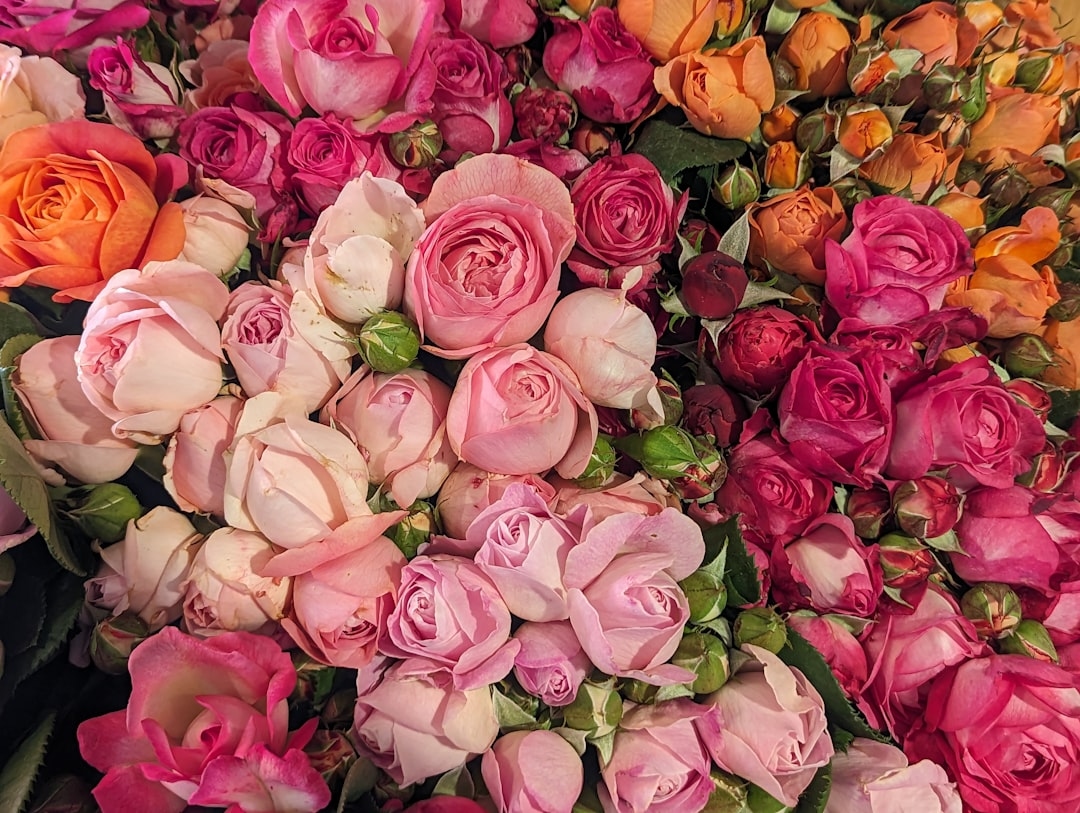
Pink is the most forgiving rose color. It works with nearly everything: lavender, white baby’s breath, peach ranunculus, blush peonies, or silver eucalyptus. For a garden-style bouquet, mix three shades of pink roses with fresh herbs like mint or rosemary for a fully organic feel.
White Roses
White roses read differently depending on what surrounds them. Pair with greenery alone for an elegant, minimalist look. Add blush or champagne ranunculus for a romantic, tonal arrangement. Introduce deep purple lisianthus for a dramatic contrast bouquet.
Yellow Roses
Yellow needs warm companions. Try orange ranunculus, peach waxflower, and dusty miller foliage. Avoid purple tones, which can make yellow roses look muddy rather than sunny.
Common Mistakes to Avoid
- Using too many focal flowers. If everything is big and bold, nothing stands out. Stick to one or two types of statement blooms — roses plus peonies, for example — and let fillers do the supporting work.
- Skipping greenery entirely. Bare stems between blooms look unfinished. Even a few sprigs of eucalyptus or ruscus leaves adds the structure a bouquet needs.
- Ignoring stem length. Flowers at identical heights create a flat, unnatural look. Cut stems at varying lengths — a 2–3 inch difference between layers adds depth and dimension.
- Mixing incompatible vase lives. If one flower lasts 5 days and another lasts 14, your bouquet will look half-dead before the long-lasting flowers peak. Check vase life before combining.
- Overcomplicating the palette. More than three colors in a single bouquet usually creates visual chaos. Start with a two-color scheme and add a neutral (white, green, or cream) as the third element.
A Sustainability Note: Choosing Eco-Friendly Companion Flowers
The US cut flower industry imports roughly 80% of its blooms, primarily from Colombia and Ecuador. Shipping flowers by air has a significant carbon footprint. If sustainability matters to you, look for locally grown alternatives at farmers markets, which run in most US cities from May through October. Lavender, sunflowers, zinnias, and herbs like rosemary and mint grow well across most US hardiness zones (3–9) and make beautiful, eco-friendly rose companions. Buying from a local farm also typically costs 30–50% less per stem than florist pricing.
Where to Buy Companion Flowers in the US
For single bouquets, Trader Joe’s and Whole Foods carry a rotating selection of companion flowers for $3–$8 per bunch. For larger quantities — say, a wedding or event — wholesale options like FiftyFlowers.com or Sam’s Club floral departments offer bulk pricing that drops per-stem costs significantly. Local florists remain the best option for rare or seasonal varieties like peonies and ranunculus outside their natural growing window.
Practical Tips for Assembling a Rose Bouquet at Home
- Start with your greenery. Build the base layer first — eucalyptus, ruscus, or ferns. This creates a natural “frame” for your blooms.
- Add roses next, spacing them evenly so no cluster feels heavier than another.
- Insert accent flowers (ranunculus, lisianthus) between the roses at slightly lower heights.
- Finish with fillers — baby’s breath, waxflower — to fill any visible gaps.
- Trim all stems at a 45-degree angle under running water before placing in a clean vase. Change the water every two days to extend vase life by up to 50%.
FAQ: Flowers That Go With Roses in a Bouquet
What is the most popular flower to pair with roses?
Baby’s breath is the most common companion flower for roses. It’s widely available, inexpensive ($4–$6 per bunch), and its airy white blooms complement virtually every rose color. Eucalyptus is the second most popular choice, particularly for modern and garden-style arrangements.
Can you mix peonies and roses in the same bouquet?
Yes — peonies and roses are one of the most classic floral pairings. Both are lush focal flowers, so keep the ratio balanced: no more than 50% of either bloom. Peonies are seasonal in the US (peak: May–June), so plan ahead if you want this combination for an event.
What greenery goes best with roses?
Silver dollar eucalyptus, Italian ruscus, and lemon leaf (salal) are the top three choices. Eucalyptus adds fragrance and a soft blue-green tone. Ruscus is glossy and structured. Salal is the most budget-friendly at roughly $3–$5 per bunch.
How many filler flowers do I need per rose?
A good starting ratio is 2–3 stems of filler for every rose. For a 12-rose bouquet, plan on 1–2 bunches of baby’s breath and 3–5 eucalyptus sprigs. This creates a full, balanced look without burying the roses.
Do lavender and roses go together in a bouquet?
Yes, particularly with pink, white, and cream roses. Fresh lavender provides a vertical spike element that contrasts with the round rose shape. Dried lavender also works and extends the bouquet’s lifespan significantly, sometimes holding its color and structure for months.
Build Your Bouquet With Confidence
The best flowers to go with roses in a bouquet aren’t a secret — they’re just a matter of understanding texture, scale, and color contrast. Start simple: grab a dozen roses, a bunch of eucalyptus, and a few stems of lisianthus or ranunculus. Arrange them using the layering method above. You’ll be genuinely surprised how professional a three-element bouquet can look. From there, experiment seasonally — peonies in early summer, lavender in late spring, waxflower in winter. Each season gives you a new palette to work with, and roses are versatile enough to anchor all of them.