Contents:
- Why Thanksgiving Centerpiece Flowers Deserve More Thought
- The Best Thanksgiving Centerpiece Flowers by Category
- Showstopper Blooms (The Focal Flowers)
- Supporting Blooms (The Secondary Layer)
- Textural Elements (The Finishing Layer)
- Seasonal Timeline: When to Source Thanksgiving Centerpiece Flowers
- Color Palettes That Actually Work
- Arrangement Tips for a Low, Table-Friendly Centerpiece
- Common Mistakes to Avoid
- Frequently Asked Questions About Thanksgiving Centerpiece Flowers
- What flowers are best for a Thanksgiving centerpiece?
- How far in advance can I make a Thanksgiving flower centerpiece?
- What flowers are in season for Thanksgiving in the US?
- How do I keep Thanksgiving centerpiece flowers fresh longer?
- Can I mix fresh and dried flowers in a Thanksgiving centerpiece?
- Build Your Centerpiece Toolkit Now
The smell of roasting squash drifts through the house, golden afternoon light catches the edge of a copper vase, and your dining table is missing one thing — a centerpiece that actually feels like November. Thanksgiving centerpiece flowers should do more than look pretty. They should feel seasonal, hold up through a long dinner, and complement the food without competing with it.
This guide is written for gardeners who already know their way around a flower bed and want to move beyond the grocery-store mixed bouquet. You’ll find specific cultivar recommendations, a seasonal timing calendar, color theory you can actually use, and a few hard-won mistakes to skip.
Why Thanksgiving Centerpiece Flowers Deserve More Thought
Most holiday decorating advice treats Thanksgiving as an afterthought squeezed between Halloween and Christmas. That’s a shame. Late October through late November is one of the richest seasons for cutting flowers in temperate US climates — Zones 5 through 9 still support fresh blooms well into November, and the cooler temperatures mean cut flowers last 30–50% longer than they would in July.
The holiday also has a genuinely distinct color palette: amber, burnt sienna, deep plum, cream, and forest green. Working within that palette rather than against it is what separates a stunning centerpiece from a generic one.
The Best Thanksgiving Centerpiece Flowers by Category
Showstopper Blooms (The Focal Flowers)
Dahlias are the undisputed star of a fall centerpiece. ‘Café au Lait’ — a blush-to-bronze dinner-plate variety — photographs beautifully and pairs with almost every color on the Thanksgiving palette. ‘Arabian Night’, a deep burgundy-black, adds dramatic depth. Dahlias typically retail for $4–$8 per stem at US florists in October; if you grow your own, tubers planted in May in Zone 6 will yield cutting-ready blooms from late August through first frost.
Sunflowers are reliable and affordable — often $1–$2 per stem in bulk. Skip the generic yellow ‘Mammoth’ and reach for ‘Chocolate Cherry’ (deep mahogany with a near-black center) or ‘Moulin Rouge’ for a moodier, more sophisticated arrangement.
Supporting Blooms (The Secondary Layer)
Chrysanthemums are practically designed for Thanksgiving. Garden mums in bronze, rust, and white are widely available at nurseries and big-box stores from late September through mid-November. A single 4-inch pot ($5–$7) can be split apart and used as cut stems — a budget-friendly trick most gardeners overlook.
Marigolds, particularly the African variety ‘Crackerjack’, bring intensity and a subtle herbal fragrance that feels right at a harvest table. They also last 7–10 days in water, making them practical as well as pretty.
Textural Elements (The Finishing Layer)
No arrangement feels complete without textural contrast. Consider:
- Dried pampas grass — adds height and movement; harvest or purchase in September before the feathery plumes fully open
- Celosia ‘Flamingo Feather’ — velvety burgundy spikes that hold their color even as they dry
- Hypericum berries in cognac or red — berry clusters add depth and fill gaps naturally
- Eucalyptus or olive branches — muted silver-green keeps the arrangement from reading as too sweet
Seasonal Timeline: When to Source Thanksgiving Centerpiece Flowers
Timing matters more than most hobbyist gardeners realize. Here’s a practical calendar:
- Early October: Order dahlias and specialty sunflower stems from online wholesalers (Mayesh, FiftyFlowers) if you want varieties your local florist won’t stock. Allow 10–14 days for shipping.
- Mid-October: Plant spring bulbs that will inform next year’s arrangements. Cut and dry any pampas, celosia, or strawflower from your garden now, before frost.
- First week of November: Buy potted mums at nurseries — selection peaks here. Prices drop 20–30% after Halloween as stores clear inventory.
- 3–4 days before Thanksgiving: Purchase fresh-cut focal flowers. Condition stems overnight in cool water before arranging.
- Night before Thanksgiving: Build your arrangement. Avoid same-day assembly — flowers need 4–6 hours to fully hydrate after conditioning.
Color Palettes That Actually Work
The most common mistake is piling on orange. One strong anchor color goes further than three competing ones. Here are three palettes proven to work at a Thanksgiving table:
- Warm Harvest: Amber sunflowers + rust chrysanthemums + cream dahlias + dried wheat. Classic, crowd-pleasing, easy to source.
- Moody Jewel Tones: ‘Arabian Night’ dahlias + deep plum celosia + burgundy hypericum berries + eucalyptus. Elegant and unexpected.
- Neutral Organic: Dried pampas grass + white chrysanthemums + olive branches + small pumpkins or gourds. Minimalist and long-lasting — this arrangement works through the full holiday season.
Arrangement Tips for a Low, Table-Friendly Centerpiece
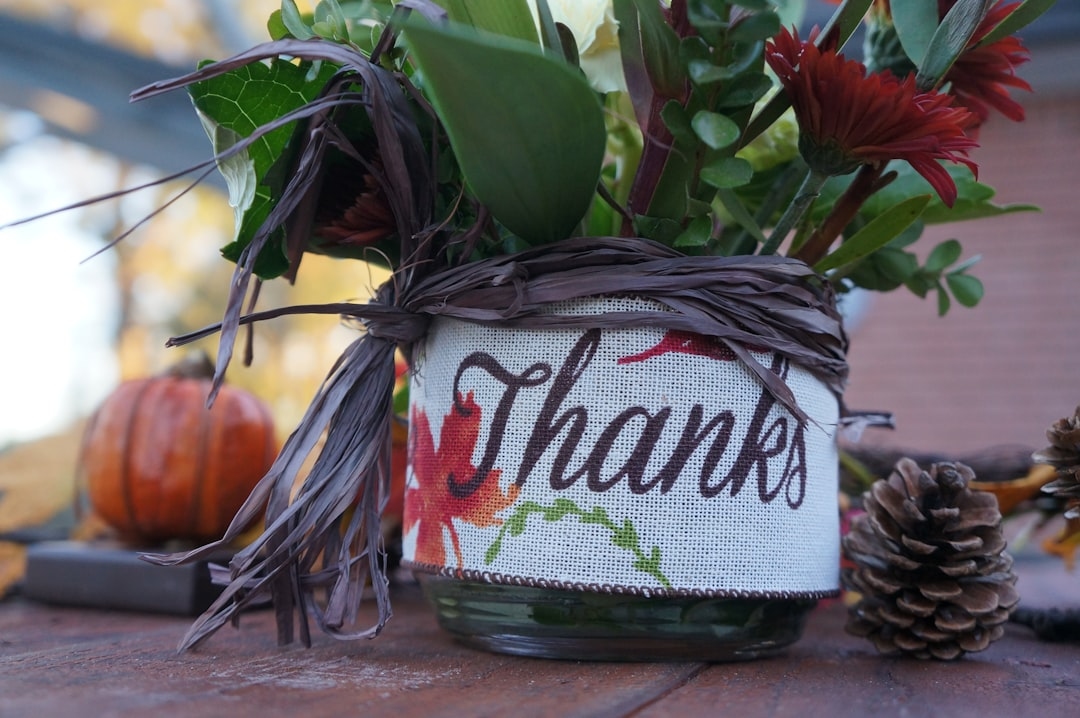
A centerpiece that blocks sightlines kills conversation. Aim for a maximum height of 10–12 inches. Cut all focal stems to 6–8 inches and use a wide, low vessel — a wooden dough bowl, a shallow terracotta pot, or a repurposed bread pan all work beautifully and cost nothing if you already own them.
For mechanics, a 3-inch floral frog (the pin-type, not foam) anchors stems securely without the waste or water contamination that foam creates. Add a handful of dried beans or gravel to keep the frog stable. Change the water every two days — cut flower life extends by roughly 40% with fresh water and a clean vessel.
Common Mistakes to Avoid
- Using floral foam. It sheds microplastics, degrades water quality, and dries out faster than a water-filled vessel. A pin frog or crumpled chicken wire does the job better.
- Buying flowers the day of. Freshly cut stems need time to hydrate. A bouquet assembled Thanksgiving morning will start wilting by the time the turkey comes out.
- Skipping foliage. A bunch of blooms without greenery looks sparse and flat. Even a few sprigs from your garden — rosemary, sage, ornamental kale — add volume and a seasonal fragrance.
- Overscaling the vessel. A tall vase forces tall stems, which forces a centerpiece that nobody can see around. Match vessel width to your table width: a 36-inch table looks best with a vessel 10–14 inches in diameter.
- Ignoring scent at the dinner table. Strongly fragrant flowers like lilies can overwhelm food aromas. Stick to lightly scented or unscented varieties — dahlias, sunflowers, and mums are all safe choices.
Frequently Asked Questions About Thanksgiving Centerpiece Flowers
What flowers are best for a Thanksgiving centerpiece?
Dahlias, chrysanthemums, sunflowers, and marigolds are the top choices. They’re seasonally appropriate, widely available in October and November, and come in the warm amber, rust, and burgundy tones that define the Thanksgiving palette. Add dried pampas grass or celosia for texture.
How far in advance can I make a Thanksgiving flower centerpiece?
Assemble your centerpiece 1–2 days before Thanksgiving. Condition cut stems in cool water for at least 4–6 hours before arranging. Most fresh arrangements stay table-ready for 5–7 days with daily water changes.
What flowers are in season for Thanksgiving in the US?
In most of the US (Zones 5–9), chrysanthemums, late-season dahlias, marigolds, and ornamental kale are naturally in season through mid-to-late November. Sunflowers are available year-round from domestic growers but peak locally in September and October.
How do I keep Thanksgiving centerpiece flowers fresh longer?
Cut stems at a 45-degree angle, place immediately in cool (not cold) water, and store in a cool room overnight before arranging. Change vase water every 2 days, trim 1/2 inch from stems at each change, and keep the arrangement away from heating vents and direct sunlight.
Can I mix fresh and dried flowers in a Thanksgiving centerpiece?
Yes — and it often looks better than all-fresh. Dried pampas grass, strawflowers, and celosia add texture and volume without wilting. Combine them with fresh dahlias or mums for an arrangement that looks intentional rather than accidental. Dried elements also extend the display life well beyond the holiday weekend.
Build Your Centerpiece Toolkit Now
The gardeners who consistently put together beautiful Thanksgiving arrangements aren’t buying more flowers — they’re planning earlier and sourcing smarter. Start a cutting garden section this coming spring with dahlias, sunflowers, and celosia specifically earmarked for fall arrangements. Order a pin frog and a low terracotta bowl before October. Clip a few stems of whatever is still blooming in your garden right now to experiment with conditioning times and vessel proportions before the holiday pressure kicks in.
Thanksgiving is one of the most rewarding holidays to decorate for, because the seasonal palette is already rich and the bar for “beautiful” is honestly not that high. A well-chosen trio of dahlias, some copper-toned mums, and a branch of olive foliage will outperform any grocery-store mixed bouquet — and you’ll have built the skills to do it again, better, next year.