Contents:
- Why Butterflies Choose Certain Flowers Over Others
- Top Flowers That Attract Butterflies (With Specifics)
- Milkweed (Asclepias spp.) — The Non-Negotiable
- Coneflower (Echinacea purpurea)
- Lantana (Lantana camara)
- Zinnias (Zinnia elegans)
- Butterfly Bush (Buddleja davidii) — Use With Caution
- Regional Flower Picks: What Works Where You Live
- Practical Tips for Setting Up a Butterfly Garden
- Frequently Asked Questions
- What is the single best flower to attract butterflies?
- Do butterflies prefer certain flower colors?
- How many plants do I need to attract butterflies?
- Will flowers attract butterflies to a container garden or balcony?
- When should I plant flowers to attract butterflies?
- Start Small, Think Like a Butterfly
Here’s a myth worth busting: butterflies are drawn to the prettiest flowers in your garden. Not even close. Butterflies are pragmatic creatures — they follow nectar, host plants, and bloom timing, not aesthetics. That gorgeous rose bed you planted? Most butterflies will fly right past it. The scraggly patch of milkweed by your fence? That’s prime real estate for a Monarch. Understanding what flowers attract butterflies changes everything about how you plan and plant.
This guide cuts through the confusion and gives you exactly what you need — specific plants, regional recommendations, and pro-level tips — even if you’ve never planted a single seed before.
Why Butterflies Choose Certain Flowers Over Others
Butterflies have two main flower needs: nectar sources for adult feeding and host plants for laying eggs. Most gardeners only think about the first one and wonder why butterflies pass through without staying. A truly butterfly-friendly garden serves both purposes.
Adult butterflies feed through a long, tube-like proboscis, which means they strongly prefer flat or shallow flowers they can land on and access easily. Tubular flowers like honeysuckle can work for some species, but wide, open blooms — think coneflowers and zinnias — are universally accessible. Butterflies also see ultraviolet light, making purple, pink, yellow, and orange blooms especially attractive to them.
One more thing beginners often miss: bloom timing matters as much as bloom type. Plan your garden to have something flowering from early spring through fall, and you’ll attract butterflies during every migration and breeding window, not just peak summer.
Top Flowers That Attract Butterflies (With Specifics)
Milkweed (Asclepias spp.) — The Non-Negotiable
If you plant nothing else, plant milkweed. It’s the sole host plant for Monarch butterflies, meaning it’s the only plant where Monarchs will lay their eggs. Common milkweed (Asclepias syriaca) works beautifully in Zones 3–9, while tropical milkweed (Asclepias curassavica) thrives in Zones 8–11. A single milkweed plant can support an entire Monarch reproductive cycle. Plant at least 3–5 stems per garden bed to make a visible impact.
Coneflower (Echinacea purpurea)
Coneflowers are one of the hardest-working plants in any butterfly garden. Their wide, flat flower heads are perfect landing pads, and they bloom from June through August — right in the heart of butterfly season. They’re native to North America, extremely drought-tolerant once established, and grow well in Zones 3–9. Research from the Xerces Society identifies coneflower as a top-10 pollinator plant across all US regions.
Lantana (Lantana camara)
Few plants produce nectar as prolifically as lantana. It blooms nonstop from spring through frost and supports dozens of butterfly species, including Swallowtails, Painted Ladies, and Gulf Fritillaries. In frost-free climates (Zones 9–11), it can grow as a perennial shrub up to 6 feet tall. In cooler zones, treat it as an annual — it’s worth replanting every year.
Zinnias (Zinnia elegans)
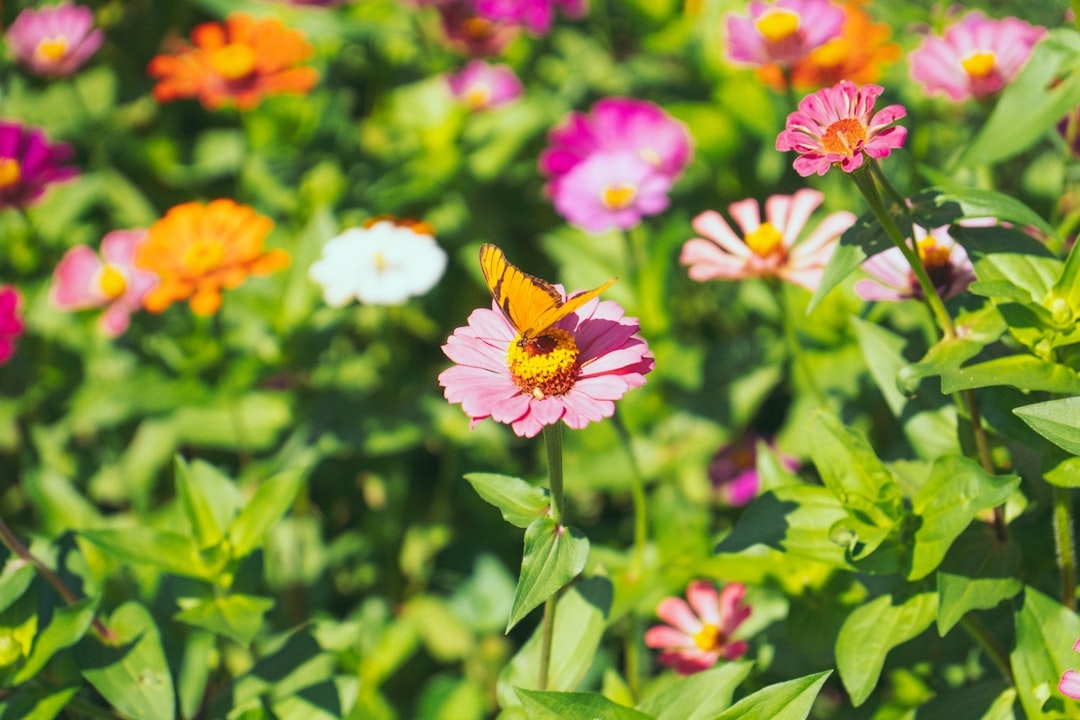
Zinnias are the beginner’s best friend. They’re cheap (seed packets average $2–$4), easy to grow from seed, and attract an enormous variety of butterfly species. Wide, flat blooms in red, orange, pink, and yellow are especially attractive. For maximum impact, plant them in clusters of at least 10–12 plants rather than scattering individuals throughout a bed.
Butterfly Bush (Buddleja davidii) — Use With Caution
Yes, butterfly bush lives up to its name as a nectar magnet. But it’s classified as invasive in several states including Oregon, Washington, and parts of the Mid-Atlantic. If you’re in those regions, swap it for native alternatives like native Joe Pye Weed (Eutrochium purpureum), which delivers similar nectar benefits without the ecological risk.
Regional Flower Picks: What Works Where You Live
Not every plant thrives everywhere, and butterfly species vary by region too. Here’s a quick breakdown:
- Northeast (Zones 4–6): Focus on native asters, wild bergamot (Monarda fistulosa), and common milkweed. These support local species like Eastern Tiger Swallowtails and Monarchs passing through on migration.
- South (Zones 7–10): Lantana, passionflower vine (host plant for Gulf Fritillaries), and firebush (Hamelia patens) are powerhouses. The longer growing season means you can maintain near-continuous bloom from March through November.
- West Coast (Zones 8–10): Native buckwheats (Eriogonum spp.) and California lilac (Ceanothus) are exceptional for supporting local species like the Western Tiger Swallowtail and Anise Swallowtail. Avoid butterfly bush entirely in this region due to invasiveness.
- Midwest (Zones 4–7): Prairie natives shine here — black-eyed Susans, prairie blazing star (Liatris pycnostachya), and swamp milkweed are all excellent choices that require minimal care once established.
Practical Tips for Setting Up a Butterfly Garden
Plants matter, but so does garden design. Here are specific strategies that actually move the needle:
- Plant in full sun. Butterflies are cold-blooded and need warmth to fly. A garden that gets fewer than 6 hours of direct sun daily will see significantly less butterfly activity, regardless of what you plant.
- Add flat stones. Butterflies bask on warm surfaces to regulate body temperature. A few flat rocks in a sunny spot give them a reason to linger.
- Skip the pesticides. Even “butterfly-safe” pesticide labels can be misleading. Systemic insecticides like imidacloprid contaminate nectar and can kill butterfly larvae. Go organic or go without in any section of your yard you want to attract butterflies.
- Cluster your plantings. A butterfly needs to spot a flower from the air. A single plant is easy to miss. A 3-foot-wide cluster of the same flower creates a visible target. Group plants in odd numbers — three, five, or seven — for both visual appeal and ecological effectiveness.
- Provide a water source. A shallow dish with wet sand or pebbles (called a puddling station) gives butterflies the minerals and moisture they need. Keep it consistently damp.
🌿 What the Pros Know: Master gardeners and butterfly conservationists often prioritize native host plants over nectar sources — because nectar plants bring butterflies through, but host plants make them stay and reproduce. Before buying anything, look up the top 3–5 butterfly species in your specific state and find their host plants. That targeted approach will do more for your local butterfly population than any generic “butterfly mix” seed packet ever will.
Frequently Asked Questions
What is the single best flower to attract butterflies?
Milkweed (Asclepias spp.) is the most ecologically important choice because it’s the only host plant for Monarch butterflies. For pure nectar attraction across the most species, lantana and coneflower are top performers in most US regions.
Do butterflies prefer certain flower colors?
Yes. Butterflies are most strongly attracted to purple, pink, yellow, orange, and red flowers. They can see ultraviolet light, which makes these warm, bright colors especially visible to them. White and green flowers tend to attract fewer butterflies.
How many plants do I need to attract butterflies?
Start with at least 3–5 milkweed plants plus one nectar-rich bloomer like coneflower or zinnia in clusters of 10 or more. A small 4×4-foot dedicated patch is enough to start seeing regular butterfly visitors within one growing season.
Will flowers attract butterflies to a container garden or balcony?
Absolutely. Lantana, zinnias, and pentas (Pentas lanceolata) all perform well in containers. Place them in full sun, water consistently, and even a balcony garden can attract Swallowtails and Painted Ladies — especially during migration periods in spring and fall.
When should I plant flowers to attract butterflies?
Plant after your last frost date for annuals like zinnias and lantana. For perennials like coneflower and milkweed, early spring or fall planting gives roots time to establish. Aim to have blooms open by late May to catch the beginning of peak butterfly season in most US regions.
Start Small, Think Like a Butterfly
You don’t need a sprawling garden to make a difference. A single sunny patch with milkweed, a cluster of coneflowers, and a flat stone can transform your yard into a genuine waypoint on a butterfly’s journey. Start with two or three plants this season, observe which species visit, and then research their specific host plants for next year. That iterative approach — plant, observe, expand — is exactly how serious butterfly gardeners build habitats that support dozens of species over time. Your garden is already waiting to become something extraordinary.