Contents:
- Why Sunflower Timing Is More Than Just “After the Last Frost”
- Plant Sunflower Seeds Outdoors Timing by US Region
- Northeast and Midwest (USDA Zones 4–6)
- The South and Southeast (USDA Zones 7–9)
- West Coast (USDA Zones 8–10)
- Reading Soil Temperature: The Most Underused Trick
- How Deep and How Far Apart to Plant
- Succession Planting for Continuous Blooms
- An Eco-Friendly Approach to Sunflower Growing
- Frequently Asked Questions
- What is the best time to plant sunflower seeds outdoors?
- Can I plant sunflower seeds directly in the ground?
- How long does it take for sunflower seeds to germinate outdoors?
- Can I plant sunflowers too late in the season?
- Do sunflowers need full sun to germinate outdoors?
- Plan Now, Plant at the Right Moment
You’re standing in the garden center in early spring, a packet of sunflower seeds in hand, and the question hits you: is it too early to plant sunflower seeds outdoors? The timing feels obvious — warm weather, sunny days — but get it wrong by even two or three weeks and you’re fighting frost damage, sluggish germination, or sunflowers that peak in September when everyone’s attention has already shifted to fall. Nailing the plant sunflower seeds outdoors timing is the difference between a garden that turns heads and one that just turns into compost.
Why Sunflower Timing Is More Than Just “After the Last Frost”
Most gardening advice stops at “plant after your last frost date.” That’s a starting point, not a strategy. Sunflowers (Helianthus annuus) are warm-season annuals that thrive when soil temperatures sit consistently between 70°F and 85°F. Below 55°F and germination stalls — seeds just sit in cold, damp soil and rot. Above 95°F at planting time and the seedlings can stress before they’ve even had a chance to establish roots.
The goal is to synchronize three things: air temperature, soil temperature, and your local frost calendar. When all three align, sunflowers respond fast. Under ideal conditions, most varieties germinate in just 7 to 10 days and reach full bloom in 70 to 100 days depending on the cultivar.
Plant Sunflower Seeds Outdoors Timing by US Region
Northeast and Midwest (USDA Zones 4–6)
In New England, upstate New York, Michigan, and similar climates, the sweet spot for direct sowing is mid-May through early June. Last frost dates in these zones typically fall between April 15 and May 15. Wait until at least two weeks after your last expected frost before putting seeds in the ground. Soil in these regions takes longer to warm up, so using a soil thermometer — not just checking the calendar — is worth the $10 investment.
The South and Southeast (USDA Zones 7–9)
Gardeners in Georgia, Texas, the Carolinas, and Florida have a real advantage: two planting windows. The first window opens in March or early April, well before northern gardeners can even consider it. A second succession planting in late July or August can produce blooms that carry through October. Just be prepared for summer heat stress — afternoon shade cloth or deep watering schedules can protect plants during the harshest 95°F+ stretches.
West Coast (USDA Zones 8–10)
The Pacific Coast is almost unfairly kind to sunflowers. In coastal California, planting can start as early as late February or March in warmer microclimates, stretching to a long season that runs through summer. Inland areas of the Pacific Northwest should wait until late April to avoid late-season cold snaps. The relatively mild, dry summers on the West Coast produce some of the most dramatic multi-headed varieties — Velvet Queen, Autumn Beauty — that love a long, stable growing season.
Reading Soil Temperature: The Most Underused Trick
A soil thermometer is the single most useful tool you’re probably not using. Push it 2 inches into the ground in the morning — that’s when soil is at its coolest — and look for a consistent reading of 60°F or above. Many experienced growers wait until the soil hits 65°F to 70°F for even faster, more uniform germination.
Horticulturist Dr. Marianne Okafor, Extension Master Gardener and floral crop specialist at the University of Georgia Cooperative Extension, recommends this approach: “Don’t trust the date alone. I’ve seen gardeners in Zone 7 lose a full first planting because they went by the calendar and skipped the soil check. Two extra days of waiting for the right temperature can save you three weeks of re-sowing.”
How Deep and How Far Apart to Plant
Sunflower seeds should be sown 1 inch deep in well-draining soil with a pH between 6.0 and 7.5. For tall varieties like Russian Mammoth or Skyscraper (which can reach 12 feet), space seeds 24 inches apart. Smaller, multi-branching varieties like Lemon Queen or Teddy Bear can be planted 6 to 12 inches apart for a fuller, more dramatic display.
Direct sowing is almost always preferred over transplanting — sunflowers develop a deep taproot early, and any disruption to that root system slows establishment significantly. Start outdoors, and stay outdoors.
Succession Planting for Continuous Blooms
One sowing gives you one spectacular flush. Two or three successive plantings, spaced 2 to 3 weeks apart, keep blooms coming from midsummer well into early fall. This strategy works especially well for gardeners who cut sunflowers for home arrangements or sell them at farmers markets — you maintain a steady supply rather than one glorious, unrepeatable moment.
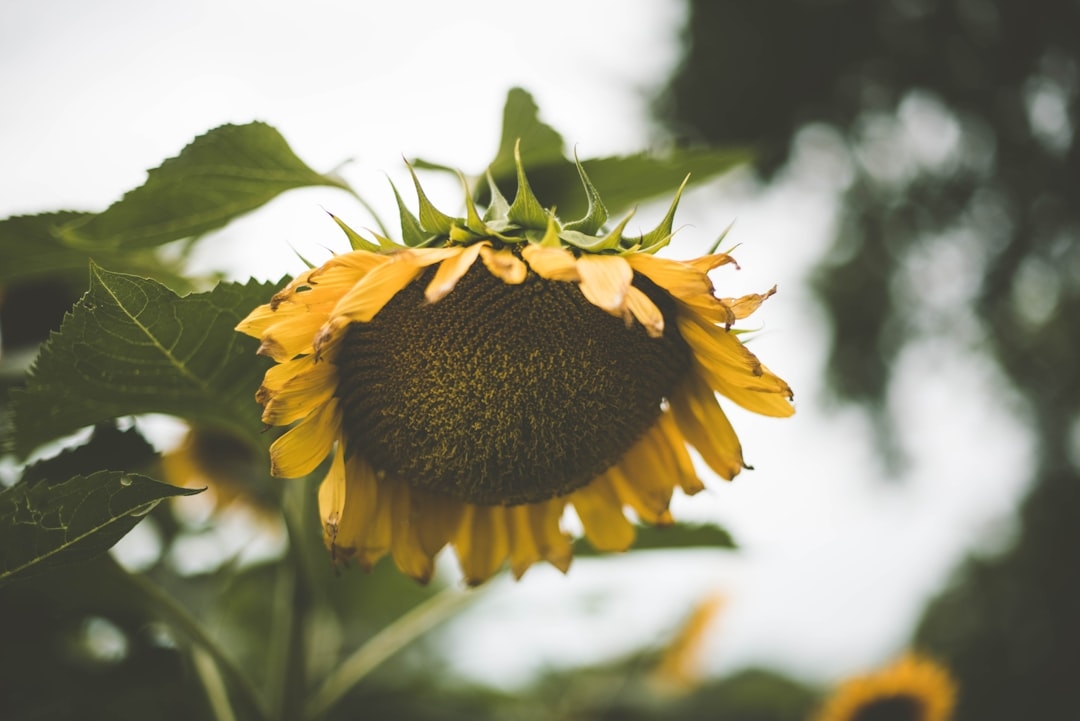
Plan your last sowing date by counting backward from your first expected fall frost. Most standard varieties need 75 to 95 days to bloom, so your final outdoor planting should go in at least 100 days before frost to allow for establishment time.
An Eco-Friendly Approach to Sunflower Growing
Sunflowers are natural soil improvers — their roots help break up compacted earth and their biomass can be composted at season’s end rather than sent to landfill. Going one step further, choosing open-pollinated or heirloom varieties (like Hopi Black Dye or Mammoth Grey Stripe) means you can save seeds for next year’s planting. That’s a zero-cost, zero-waste cycle that keeps your garden self-sustaining. Open-pollinated sunflower seeds can also be purchased for as little as $2 to $4 per packet from specialty seed companies, making them one of the most affordable flowers to grow season over season.
Sunflowers are also exceptional pollinator plants. A single large-headed sunflower can attract dozens of native bee species. Leaving spent flower heads standing through late fall provides seed food for goldfinches, chickadees, and other birds through the lean winter months.
Frequently Asked Questions
What is the best time to plant sunflower seeds outdoors?
The best time is after your last frost date when soil temperatures have reached at least 60°F. In most of the US, this falls between mid-April and early June depending on your region and USDA hardiness zone.
Can I plant sunflower seeds directly in the ground?
Yes — direct sowing is strongly preferred. Sunflowers develop a deep taproot that makes transplanting difficult. Sow seeds 1 inch deep directly into your garden bed after the soil has warmed sufficiently.
How long does it take for sunflower seeds to germinate outdoors?
Under ideal conditions — soil temperatures of 70°F to 85°F and consistent moisture — sunflower seeds germinate in 7 to 10 days. Cooler soils can delay germination to 14 to 21 days.
Can I plant sunflowers too late in the season?
Yes. Count backward from your first fall frost date by at least 100 days. Most varieties need 75 to 95 days to reach full bloom, so planting too late results in frost killing the plant before it flowers.
Do sunflowers need full sun to germinate outdoors?
Sunflowers need a minimum of 6 to 8 hours of direct sunlight daily once they sprout. For germination, warmth and moisture matter more than light — but choosing a full-sun planting location from the start sets them up for their best growth.
Plan Now, Plant at the Right Moment
Pull up your local frost date right now — the Old Farmer’s Almanac frost date calculator takes about 30 seconds — and mark two dates on your calendar: your earliest safe planting window and your succession sowing date two weeks later. Pick up a basic soil thermometer before your window opens. Choose one open-pollinated variety you’ve never grown before alongside a reliable favorite. Then when the soil hits 65°F and the nights stop dipping below 50°F, you won’t be guessing. You’ll be ready.