Contents:
- Why Fall Is One of the Best Seasons for Floral Design
- Top Fall Wedding Centerpiece Flowers by Category
- Statement Blooms: The Focal Flowers
- Supporting Blooms: The Volume Flowers
- Dried and Preserved Elements: The Modern Fall Texture
- Foliage and Fillers: The Structural Support
- Budget Breakdown for Fall Centerpieces
- Practical Tips for Small-Space DIY Assembly
- FAQ: Fall Wedding Centerpiece Flowers
- What are the most popular fall wedding centerpiece flowers?
- How far in advance can I make fall wedding centerpieces?
- What fall flowers are most budget-friendly for centerpieces?
- Are sunflowers a good choice for fall wedding centerpieces?
- What foliage works best with fall wedding flowers?
- Building Your Fall Centerpiece Flower List
You’ve probably spent more time than you’d like scrolling through Pinterest boards, only to find the same pumpkin-and-sunflower combinations repeated endlessly. Fall weddings deserve more nuance than that. The season itself is botanically extraordinary — a convergence of warm tones, cooling temperatures, and an unusually wide palette of textures. Choosing the right fall wedding centerpiece flowers isn’t just about aesthetics. It’s about understanding which blooms hold up in a reception hall, which ones complement candlelight, and which ones will still look alive by the time the cake is cut.
This guide cuts through the noise. Whether you’re working with a florist or assembling centerpieces yourself in a small apartment kitchen, you’ll find specific, actionable recommendations here.
Why Fall Is One of the Best Seasons for Floral Design
From a horticultural standpoint, autumn is a transitional crescendo. Many flowering plants put out their most intense pigmentation as temperatures drop — a stress response that concentrates anthocyanins and carotenoids, the pigments responsible for deep reds, burnt oranges, and rich purples. This is the same biological mechanism behind fall foliage, and it makes late September through early November a peak period for warm-toned blooms.
Temperatures in the 55–70°F range are also ideal for cut flower longevity. Unlike summer weddings where heat accelerates wilting, fall events give you a meaningful buffer. A well-conditioned stem can hold for 7–14 days at these temps, which matters enormously if you’re prepping centerpieces 2–3 days in advance.
Top Fall Wedding Centerpiece Flowers by Category
Statement Blooms: The Focal Flowers
Every strong centerpiece needs an anchor — one or two flower types that draw the eye and set the color story. For fall, three species consistently outperform the rest.
- Dahlias — Available in dinner-plate varieties that reach 10–12 inches in diameter, dahlias are the architectural workhorses of fall floral design. Café au Lait (a muted blush-peachy tone) and Black Wizard (deep burgundy-black) are two cultivars that photograph exceptionally well under warm reception lighting. Wholesale cost: $1.50–$4.00 per stem depending on head size.
- Garden Roses — Unlike hybrid tea roses, garden roses have a looser, more layered structure that feels natural rather than formal. Varieties like Juliet (apricot) and Yves Piaget (magenta-pink) pair beautifully with fall greenery. Expect to pay $3.00–$6.00 per stem at wholesale.
- Marigolds (Tagetes erecta) — Often dismissed as a garden annual, the African marigold in its larger forms — especially ‘Crackerjack’ or ‘Inca Gold’ — is a legitimate centerpiece flower. Rich in color, highly fragrant, and extremely affordable at $0.50–$1.00 per stem, they’re a sleeper pick among professional florists.
Supporting Blooms: The Volume Flowers
Supporting flowers fill space, add texture, and soften the transition between focal blooms and greenery. They also significantly reduce cost per arrangement.
- Chrysanthemums — The mum family offers spider mums, cushion mums, and button mums, all of which have exceptional vase life (up to 14 days with clean water and flower food). Spider mums in bronze or rust tones add movement to arrangements.
- Alstroemeria (Peruvian Lily) — A practical powerhouse. Each stem branches into 6–10 individual blooms, making it one of the most cost-efficient flowers available at $1.00–$2.00 per stem. Available in terracotta, cream, and deep purple shades perfectly suited to fall palettes.
- Lisianthus — Often mistaken for garden roses or peonies, lisianthus has a ruffled, layered look at roughly half the price. Look for varieties in plum, violet, and cream. Cost: $2.00–$3.50 per stem.
Dried and Preserved Elements: The Modern Fall Texture
Dried botanicals have shifted from trend to standard practice in fall floral design. They add texture that fresh flowers can’t replicate, and they’re completely immune to wilting — a major practical advantage for DIY centerpieces assembled days ahead.
- Pampas grass — A single large plume can anchor a low arrangement or add vertical drama. Available in natural ivory and dyed tones.
- Lunaria (Honesty plant seed pods) — Translucent silver discs that catch candlelight beautifully. Sold dried in bunches for $8–$15.
- Cotton bolls and wheat stalks — Organic, earthy, and widely available in late fall. Bunches of 10 wheat stalks retail for $5–$8.
Foliage and Fillers: The Structural Support
A centerpiece without intentional greenery looks ungrounded. For fall specifically, look beyond standard Italian ruscus to foliage with seasonal color and texture.
- Smoke bush (Cotinus coggygria) — The feathery, cloud-like clusters in burgundy or purple add unique texture that’s hard to replicate with any other material.
- Eucalyptus (seeded or silver dollar) — Classic for a reason. Seeded eucalyptus adds movement and subtle color; silver dollar adds structure.
- Fall maple or oak leaves — If you have access to clean, pesticide-free branches, natural fall foliage is free and deeply seasonal.
🌿 What the Pros Know: Professional florists condition all their stems for a minimum of 12 hours before arranging — submerging freshly cut stems in cool water in a cool, dark space. If you’re DIYing your centerpieces in a small apartment, your bathtub filled with cool water is a perfectly functional conditioning vessel. This single step can add 3–5 days to your blooms’ vase life.
Budget Breakdown for Fall Centerpieces
Here’s a realistic cost estimate for a single low centerpiece (roughly 12 inches tall, 14 inches wide) built from wholesale flowers, assuming you’re sourcing through an online wholesale marketplace like Mayesh, FiftyFlowers, or BloomsyBox Trade:
- Budget tier ($25–$40 per centerpiece): 3 stems alstroemeria, 5 stems mums, 2 stems dried cotton bolls, a bundle of eucalyptus. Yields a full, seasonal look without specialty blooms.
- Mid-range tier ($55–$80 per centerpiece): 2 dinner-plate dahlias, 4 stems lisianthus, 3 stems alstroemeria, smoke bush foliage, pampas grass accent.
- Premium tier ($100–$150 per centerpiece): 3 garden roses (Juliet variety), 2 dahlias, lisianthus, dried lunaria, seeded eucalyptus, and a statement vessel (rented or purchased).
Vessels are often the overlooked cost. Renting low compote vases typically runs $2–$6 per piece. Buying amber or smoked glass bud vases in bulk from IKEA or Target can come in under $4 each and doubles as a guest favor opportunity.
Practical Tips for Small-Space DIY Assembly
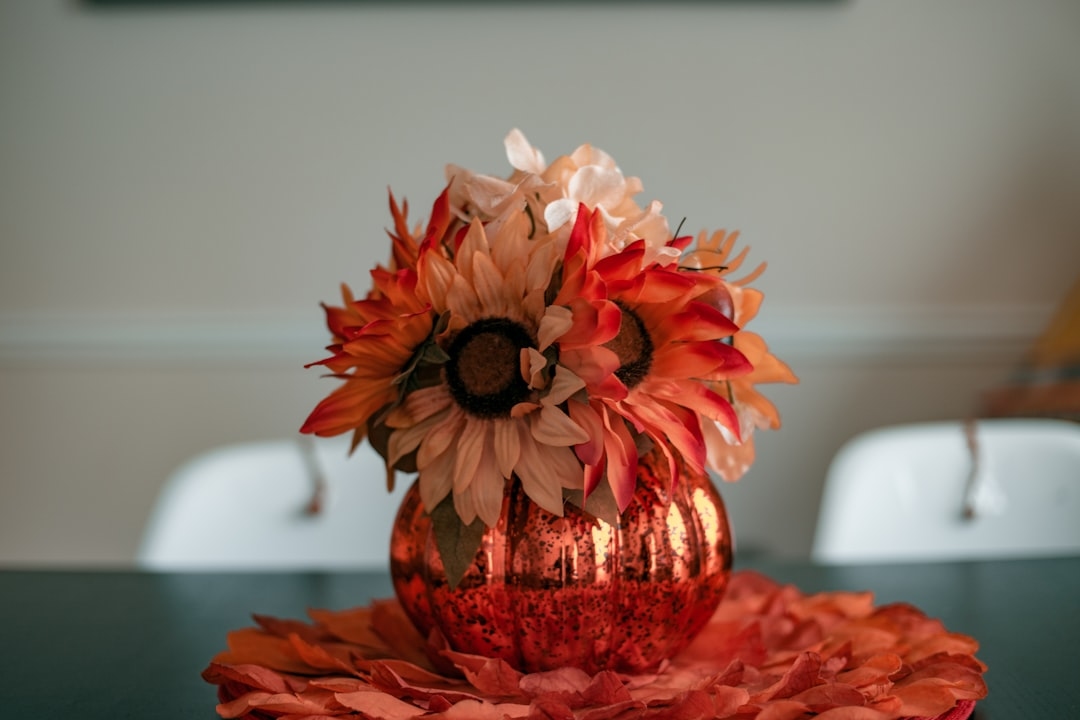
Assembling centerpieces in a studio or one-bedroom apartment is entirely doable with the right approach. The key constraint isn’t skill — it’s workspace and water management.
- Work in batches of 3: Complete three arrangements before moving to the next set. This keeps your workspace manageable and ensures consistent color distribution across all tables.
- Use a lazy Susan: A simple rotating kitchen tray lets you view your arrangement from all angles without picking it up. Critical for round centerpieces viewed from multiple seats.
- Prep stems into organized cups first: Sort your flowers by type into separate water-filled cups before you begin assembling. This is how professional florists work, and it dramatically speeds up the build.
- Refrigerate overnight if possible: A cleared-out refrigerator shelf at 38–42°F extends vase life significantly. Remove ethylene-producing produce (apples, bananas) before storing flowers.
FAQ: Fall Wedding Centerpiece Flowers
What are the most popular fall wedding centerpiece flowers?
Dahlias, chrysanthemums, garden roses, and marigolds are among the most widely used fall wedding centerpiece flowers. Dahlias in particular peak in late summer through October, making them ideal for September and October weddings.
How far in advance can I make fall wedding centerpieces?
Most fresh arrangements hold well for 2–3 days when kept in cool water and stored at 38–42°F. Centerpieces that incorporate dried elements like pampas grass or lunaria can be assembled up to 2 weeks in advance with no degradation.
What fall flowers are most budget-friendly for centerpieces?
Alstroemeria, chrysanthemums, and marigolds offer the best value. Alstroemeria in particular delivers multiple blooms per stem at $1–$2 per stem wholesale, making it the most cost-efficient option for large tables or multiple arrangements.
Are sunflowers a good choice for fall wedding centerpieces?
Sunflowers work well in rustic or outdoor settings, but they have a relatively short vase life of 5–7 days and can look heavy in more formal arrangements. They pair best with lighter fillers like baby’s breath or cosmos to prevent arrangements from looking visually dense.
What foliage works best with fall wedding flowers?
Smoke bush, seeded eucalyptus, and silver dollar eucalyptus are top choices. For a hyper-seasonal look, clean natural maple or oak foliage gathered from pesticide-free trees is free and genuinely striking under warm lighting.
Building Your Fall Centerpiece Flower List
Start with your venue’s lighting — warm incandescent light flatters orange, burgundy, and gold tones while washing out pale pink and lavender. Once you’ve confirmed your color direction, choose one statement bloom, one supporting bloom, and one dried or textural element. That three-part formula scales to any budget and produces arrangements that feel intentional rather than accidental.
If you’re working with a florist, bring a reference photo of the fall wedding centerpiece flowers you love most and ask specifically about stem availability in your wedding month — dahlia season, for example, typically closes by late October in most US growing regions. Knowing your local availability window before you finalize any design prevents last-minute substitutions that compromise your vision.
Ready to source? Start by requesting a wholesale price list from Mayesh or FiftyFlowers, both of which sell to non-licensed buyers with minimum orders. You’ll have a concrete cost-per-stem figure within 24 hours — which means your centerpiece budget stops being a guess and starts being a plan.