Contents:
- Why People Confuse Peonies and Garden Roses
- The Peony vs Garden Rose Difference: A Side-by-Side Breakdown
- Bloom Size and Petal Structure
- Scent
- Bloom Season
- Growing Conditions and Container Suitability
- How Peonies Compare to Ranunculus (Another Common Mix-Up)
- Peony vs Garden Rose for Cut Flowers: What You’re Getting
- Common Mistakes to Avoid
- Practical Tips for Small-Space Flower Lovers
- Frequently Asked Questions
- What is the main difference between a peony and a garden rose?
- Can you grow peonies in an apartment or small space?
- Do peonies or garden roses last longer in a vase?
- Which flower is more fragrant — a peony or a garden rose?
- Are garden roses and peonies the same price?
You’re standing in front of a flower display — or scrolling through a florist’s website at midnight — and there it is: a lush, layered bloom so full it looks almost impossible. Petals upon petals, soft as tissue paper, in blush or cream or deep burgundy. Is it a peony? A garden rose? Both? The confusion is completely understandable. These two flowers are the most commonly mixed-up blooms in floral design, and knowing the peony vs garden rose difference can save you money, help you pick the right plant for your windowsill, and make you sound very impressive at your next dinner party.
Why People Confuse Peonies and Garden Roses
At first glance, they share a lot of DNA — visually speaking. Both have densely packed, ruffled petals. Both come in similar color palettes: whites, pinks, corals, reds. Both are associated with romance, weddings, and cottage-garden aesthetics. And both photograph beautifully, which is why they dominate Pinterest boards and Instagram feeds alike.
But spend five minutes with each flower in hand, and the differences become obvious. The two plants come from completely different botanical families, bloom on entirely different schedules, and behave very differently — both in a vase and in a garden bed (or a pot on your balcony).
The Peony vs Garden Rose Difference: A Side-by-Side Breakdown
Bloom Size and Petal Structure
Peonies are drama queens in the best possible way. A fully open peony can reach 6 to 10 inches in diameter — roughly the size of a softball or larger. The petals are extremely soft, almost crepe-like in texture, and they layer densely from a tight center bud outward. Many varieties, especially the “bomb” type, have a fluffy, almost cloud-like center packed with smaller inner petals called petaloids.
Garden roses — also called old garden roses or shrub roses — are generally more structured. Their petals are firmer and smoother, arranged in a classic spiral or quartered rosette pattern around a visible or semi-visible center. A large garden rose bloom might reach 3 to 5 inches across. Still beautiful, but more geometric and precise compared to a peony’s exuberant sprawl.
Scent
This is where things get personal. Peonies have a heady, sweet, slightly spicy fragrance that tends to fill an entire room. It’s one of the most beloved floral scents in perfumery — think Chanel Chance or Jo Malone Peony & Blush Suede. Not all peonies are equally fragrant; double-flowered varieties like ‘Sarah Bernhardt’ and ‘Festiva Maxima’ are among the most intensely scented.
Garden roses vary wildly in scent. Modern hybrid teas often have little to no fragrance, which is a trade-off breeders made for disease resistance and repeat blooming. Old garden roses — think David Austin varieties like ‘Olivia Rose’ or ‘Munstead Wood’ — can rival peonies for richness of scent, with notes of myrrh, honey, and citrus layered into their fragrance profiles.
Bloom Season
Here’s a crucial practical difference: peonies bloom once per year, typically for 7 to 10 days in late spring (May to early June in most of the US, depending on your USDA hardiness zone). That’s it. The window is glorious but brief.
Garden roses, particularly modern varieties, are repeat bloomers. They flush multiple times from late spring through fall, giving you color and fragrance across five or six months. For a small apartment balcony or patio container, a repeat-blooming rose offers a much longer season of enjoyment per square foot.
Growing Conditions and Container Suitability
Peonies are perennials that prefer to be left undisturbed in the ground. They can live for 50 to 100 years in the right spot. They do not thrive in containers — their root systems need room and they require a cold dormancy period (at least 6 weeks below 40°F) to bloom well. If you’re in an apartment with only a balcony, a peony is not your friend.
Garden roses, by contrast, adapt beautifully to container growing. Compact varieties like ‘Flower Carpet’ or patio roses bred specifically for small spaces grow happily in a 15- to 20-gallon pot. They need 6 hours of direct sun daily, regular watering, and monthly feeding during the growing season — manageable even on a sunny city balcony.
How Peonies Compare to Ranunculus (Another Common Mix-Up)
While roses and peonies are the classic confusion pair, ranunculus flowers get caught in the mix too — especially in spring bouquets. Ranunculus blooms have a similar layered petal structure to peonies, but they’re significantly smaller (usually 2 to 3 inches across) and have thinner, more papery petals arranged in tight concentric rings. They also have a much shorter vase life — about 5 to 7 days versus a peony’s 7 to 10 days. If the bloom looks like a miniature peony with almost mathematically perfect rings of petals, it’s probably a ranunculus.
Peony vs Garden Rose for Cut Flowers: What You’re Getting
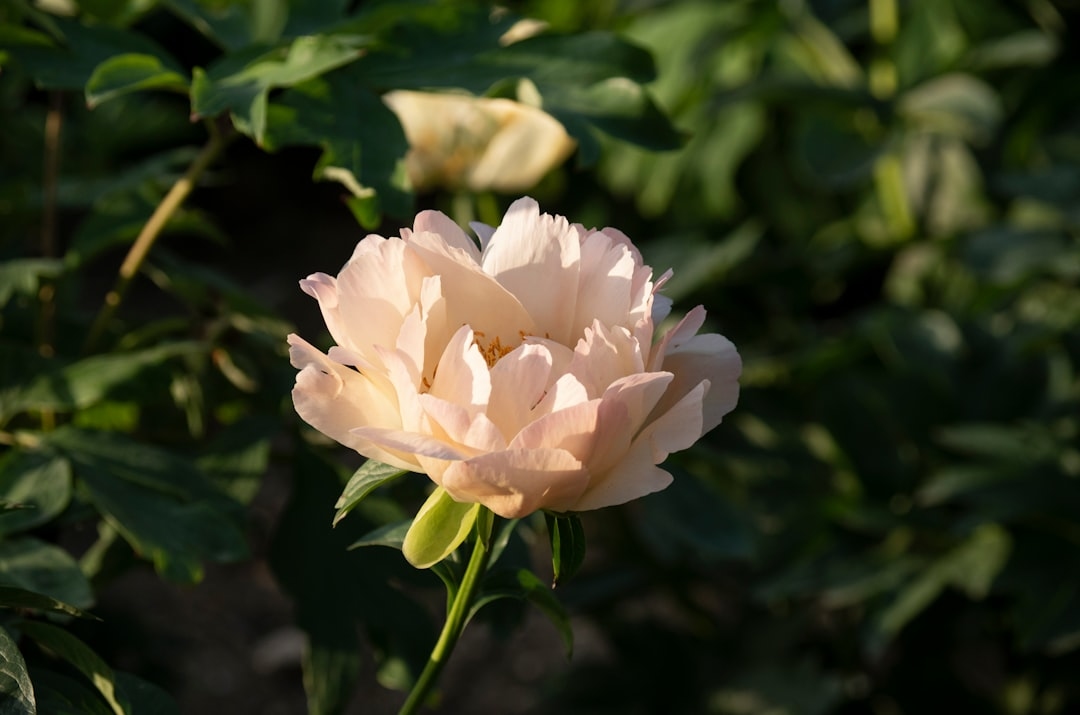
Buying peonies as cut flowers is a seasonal luxury. From late April through June, you’ll find them at farmers markets and grocery stores like Trader Joe’s and Whole Foods for roughly $4 to $8 per stem. Buy them in bud stage — when they feel like a soft marshmallow — and they’ll open over 2 to 3 days and last up to 10 days total.
Cut garden roses are available year-round from florists and grocers, typically $2 to $5 per stem for grocery store varieties, or $6 to $15 for premium garden-style roses from specialty florists. They tend to have a slightly shorter vase life (5 to 8 days) but offer far more scheduling flexibility.
Common Mistakes to Avoid
- Buying peony buds that are too tight. If the bud feels rock-hard like a marble, it may never open fully. You want the “soft marshmallow” stage — a little give when gently squeezed.
- Trying to grow peonies in containers. It almost never works long-term. Save peonies for a ground planting situation; choose a compact rose for your balcony or patio.
- Assuming all garden roses are fragrant. Check the variety before you buy. Hybrid tea roses bred for the mass market are often scentless. Look for David Austin or heirloom varieties for genuine fragrance.
- Mixing peonies with certain cut flowers. Peonies emit ethylene gas as they age, which can shorten the life of nearby flowers like carnations and snapdragons. Keep them in their own vase or pair with ethylene-tolerant blooms like sunflowers.
- Missing peony season. It’s short. Sign up for a local CSA flower subscription or set a calendar reminder for mid-May if you don’t want to miss it.
Practical Tips for Small-Space Flower Lovers
If you’re working with limited space, here’s how to get the most out of both flowers without committing to a full garden overhaul.
- For cut flowers on a budget: Buy peonies in season from Trader Joe’s or a local farmers market (late May is peak). A $10 bunch can fill a room with fragrance for a week.
- For a balcony or patio: Choose a patio rose like ‘Cupcake’ or ‘The Fairy’ in a 15-gallon container with well-draining potting mix. Feed with a slow-release rose fertilizer every 6 weeks.
- For a long vase life: Change the water every 2 days, re-cut stems at an angle, and keep your arrangement away from direct sun and fruit bowls (ethylene from ripening fruit shortens bloom life).
- For the peony look year-round: David Austin garden roses like ‘Juliet’ or ‘Keira’ mimic the lush, layered peony aesthetic but bloom repeatedly. They’re the closest thing to a peony that doesn’t disappear after 10 days.
Frequently Asked Questions
What is the main difference between a peony and a garden rose?
Peonies have larger, softer blooms (up to 10 inches wide) with a crepe-like petal texture and bloom only once per year in late spring. Garden roses have firmer, more structured petals, bloom repeatedly from spring through fall, and are far better suited to container growing.
Can you grow peonies in an apartment or small space?
Peonies are not well-suited to container growing. They need deep ground planting and a cold dormancy period to bloom reliably. For small spaces, compact garden rose varieties in 15- to 20-gallon containers are a much better choice.
Do peonies or garden roses last longer in a vase?
Peonies typically last 7 to 10 days when cut at the bud stage and kept in fresh water. Garden roses average 5 to 8 days. Both benefit from clean cuts, fresh water changes every 2 days, and placement away from heat and ripening fruit.
Which flower is more fragrant — a peony or a garden rose?
It depends on the variety. Peonies like ‘Sarah Bernhardt’ are intensely fragrant. Old garden roses and David Austin varieties can be equally rich in scent. Modern hybrid tea roses are often nearly scentless, so variety selection matters more than flower type.
Are garden roses and peonies the same price?
Peonies are a seasonal luxury, typically $4 to $8 per stem when in season (May–June). Cut garden roses are available year-round at $2 to $15 per stem depending on variety and source. Peonies are generally more expensive per stem and unavailable out of season.
Now that you can tell them apart with confidence, the next step is deciding which one earns a spot in your home — or your next bouquet. If you want something fleeting and unforgettable, chase peony season. If you want a flowering companion that grows with you through the seasons, a garden rose in a sunny container might just become your most rewarding plant. Either way, you’ll never mix them up again.