Contents:
- Why Most Flowers Fail Indoors (And What to Look For Instead)
- The Best Small Apartment Flowers, Ranked by Ease
- Peace Lily (Spathiphyllum) — Best for Low Light
- African Violet (Saintpaulia) — Best for Windowsills
- Kalanchoe (Kalanchoe blossfeldiana) — Best for Beginners Who Forget to Water
- Pothos with Blooming Companions — Best for Aesthetic Pairing
- Bromeliad (Bromeliaceae family) — Best Single Statement Plant
- Anthuriums — Best for Year-Round Color
- A Seasonal Blooming Calendar for Apartment Flowers
- Small Apartment Flowers vs. Houseplants: A Common Mix-Up
- Practical Care Tips for Flowering Plants in Small Spaces
- FAQ: Small Apartment Flowers
- What flowers grow best in a small apartment with little light?
- How do I keep flowers alive in an apartment without a balcony?
- Are apartment flowers safe for pets?
- How much do indoor flowering plants typically cost?
- How often should I repot my apartment flowers?
- Build Your Indoor Garden One Plant at a Time
You buy a pretty plant, set it on the windowsill, and two weeks later it’s a sad, drooping mess. Sound familiar? Most people pick flowers based on looks alone — and that’s exactly where things go wrong. Growing flowers in a small apartment isn’t hard, but it does require choosing varieties that are built for indoor life: limited light, dry air, and not much room to spread out. Pick the right ones and you’ll have blooms on your coffee table year-round. Pick wrong, and you’re back at the garden center.
This guide cuts through the noise and gives you a practical list of small apartment flowers that genuinely thrive indoors, along with honest advice on what they need to stay alive and blooming.
Why Most Flowers Fail Indoors (And What to Look For Instead)
The average apartment gets 6–8 hours of indirect light per day — far less than the 10–12 hours many outdoor flowering plants need. Add in central heating that drops indoor humidity to 20–30% in winter (outdoor air averages 50–60%), and you’ve got conditions that punish the wrong plant fast.
The flowers that succeed indoors share a few traits: they tolerate low to medium light, handle inconsistent watering, and don’t demand the kind of root space a garden bed provides. They also tend to be compact — topping out at 12–18 inches — which matters when your windowsill is eight inches deep.
The Best Small Apartment Flowers, Ranked by Ease
1. Peace Lily (Spathiphyllum) — Best for Low Light
Peace lilies are the gold standard for beginners. They bloom reliably in north-facing windows, tolerate neglect, and actually tell you when they need water — the leaves droop slightly before they’re in serious trouble. Expect elegant white blooms from late winter through early summer, with a second smaller flush possible in fall. A 6-inch pot fits easily on a bookshelf or side table. Keep them away from cold drafts; they prefer temperatures between 65–85°F.
One thing to know: Peace lilies are toxic to cats and dogs, so place them out of reach if you have pets.
2. African Violet (Saintpaulia) — Best for Windowsills
African violets are compact — most varieties stay under 6 inches tall — and bloom almost continuously when given bright, indirect light. An east-facing window is ideal. They come in purple, pink, white, and bicolor. Water them from the bottom by setting the pot in a saucer of water for 20–30 minutes; watering from above can cause leaf spotting. Available at most garden centers for $5–$10, they’re also one of the most affordable options on this list.
3. Kalanchoe (Kalanchoe blossfeldiana) — Best for Beginners Who Forget to Water
Kalanchoe is a succulent that flowers — clusters of tiny blooms in red, orange, yellow, or pink that last 6–8 weeks per cycle. It stores water in its thick leaves, so missing a watering by a few days won’t kill it. Give it a south or west-facing window and let the soil dry out completely between waterings. After blooming, give it 6 weeks of reduced light (about 8–10 hours of darkness per day) to trigger a new bloom cycle.
4. Pothos with Blooming Companions — Best for Aesthetic Pairing
Pothos itself doesn’t flower indoors, but it’s worth mentioning because it’s frequently sold alongside flowering plants and confused for one. Pair it with a kalanchoe or a bromeliad — both tolerate similar light conditions — and you get lush foliage plus color without overcrowding a small space.
5. Bromeliad (Bromeliaceae family) — Best Single Statement Plant
Bromeliads are almost unfairly easy. A single plant produces one dramatic flower spike — in red, orange, pink, or yellow — that lasts 3–6 months. They thrive in bright, indirect light and need very little soil moisture; instead, keep the central cup (the rosette formed by the leaves) filled with an inch of water, refreshed weekly. After the main bloom fades, the mother plant produces “pups” — small offshoots you can repot and grow into the next blooming plant.
6. Anthuriums — Best for Year-Round Color
Anthuriums produce waxy, heart-shaped spathes in red, pink, or white that aren’t technically petals but look exactly like flowers and last 2–3 months per bloom. With the right conditions — bright indirect light and humidity above 50% — they can rebloom every 3–4 months, giving you near-continuous color. A small humidifier nearby or a pebble tray with water under the pot will boost humidity without soaking the roots.
A Seasonal Blooming Calendar for Apartment Flowers
One of the smartest things you can do as a beginner is stagger your plant choices so something is always in bloom. Here’s a rough guide for US apartments:
- Winter (December–February): Peace lily (first bloom cycle), kalanchoe (widely available in stores January–February), paperwhite narcissus bulbs forced indoors.
- Spring (March–May): African violets peak, anthuriums rebloom, amaryllis bulbs planted in December come into full flower.
- Summer (June–August): Bromeliads hold their long-lasting spikes, peace lily second flush, hibiscus in a sunny window.
- Fall (September–November): Kalanchoe re-triggered for winter bloom, cyclamen (cold-tolerant, great for a cool windowsill), chrysanthemums bought as seasonal plants.
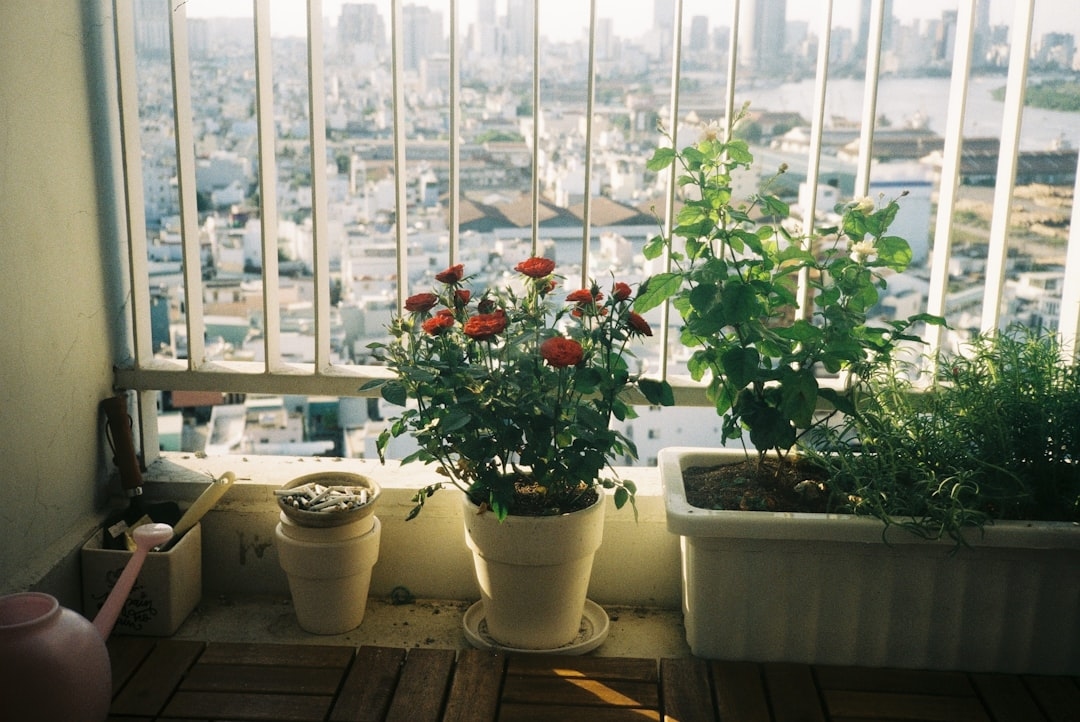
With three or four plants chosen across this calendar, you’ll rarely have a week without some color in your apartment.
Small Apartment Flowers vs. Houseplants: A Common Mix-Up
At the garden center, flowering plants and foliage houseplants are often grouped together, which causes a lot of confusion. Pothos, snake plants, and ZZ plants are excellent apartment plants — but they don’t produce meaningful blooms indoors. They’re sold for their leaves, not their flowers.
True flowering apartment plants — like the ones listed above — are selected specifically for their ability to produce blooms in indoor conditions. If color is your goal, check the label: it should state expected bloom time and light requirements. “Low light” on a flowering plant usually means 25–50 foot-candles, which is the equivalent of sitting about 5–8 feet from a north-facing window.
Practical Care Tips for Flowering Plants in Small Spaces
- Use a moisture meter. A basic one costs $10–$15 and removes all the guesswork about when to water. Overwatering kills more apartment flowers than underwatering does.
- Rotate your plants quarterly. A quarter-turn every 2–3 months ensures even light exposure and prevents lopsided growth.
- Feed during active growth. A balanced liquid fertilizer (10-10-10) diluted to half strength, applied once a month from March through September, is enough for most flowering houseplants.
- Deadhead spent blooms. Removing faded flowers redirects the plant’s energy into producing new ones rather than setting seed.
- Watch for root bound signs. If roots are circling the drainage hole or pushing out of the soil, it’s time to move up one pot size — typically 2 inches wider in diameter.
FAQ: Small Apartment Flowers
What flowers grow best in a small apartment with little light?
Peace lilies and anthuriums are the top choices for low-light apartments. Both tolerate north-facing windows and indirect light conditions typical of interior rooms. Peace lilies bloom from late winter to early summer; anthuriums can rebloom every 3–4 months year-round.
How do I keep flowers alive in an apartment without a balcony?
Choose plants adapted to indoor conditions rather than trying to force outdoor varieties inside. Use a moisture meter to avoid overwatering, place plants within 3–5 feet of a window, and supplement with a grow light (a 10W full-spectrum LED works for a single shelf) if natural light is very limited.
Are apartment flowers safe for pets?
Not all of them. Peace lilies and anthuriums are toxic to cats and dogs if ingested. Safer alternatives for pet owners include African violets, bromeliads, and orchids, all of which are non-toxic according to the ASPCA.
How much do indoor flowering plants typically cost?
At US garden centers and retailers like Home Depot or Trader Joe’s, most beginner-friendly flowering plants cost $5–$25. African violets and kalanchoes are typically at the lower end ($5–$12); anthuriums and bromeliads run $15–$30 depending on size and variety.
How often should I repot my apartment flowers?
Most small flowering plants need repotting every 1–2 years. Spring is the best time — the plant is entering active growth and recovers quickly. Move up only one pot size (2 inches in diameter) at a time; too large a pot holds excess moisture and can cause root rot.
Build Your Indoor Garden One Plant at a Time
Start with one plant — a kalanchoe or a peace lily — and get comfortable with its rhythm before adding more. Once you understand how your apartment’s light changes across seasons (it shifts more than you’d expect from summer to winter), you’ll know exactly where to place the next one. The goal isn’t a full greenhouse; it’s a living space that has something in bloom every time you walk in the door. Add a second plant after 60 days, stagger the types using the seasonal calendar above, and within a year you’ll have a reliable rotation of small apartment flowers that practically take care of themselves.