Contents:
- The Morning Glory Bloom Start: A Seasonal Timeline
- Why Morning Glories Are Slow to Flower (And How to Speed Them Up)
- Scarification: The Single Best Trick
- Soil and Fertilizer: Less Is More
- Container Growing and Bloom Timing
- Choosing Varieties That Bloom Earlier
- The Eco-Friendly Case for Morning Glories
- Getting the Most Out of Bloom Season
- Frequently Asked Questions About Morning Glory Blooming
- How long does it take for morning glories to bloom after planting?
- Why are my morning glories not blooming?
- Do morning glories bloom all summer?
- What month do morning glories bloom?
- Can I start morning glories indoors to get earlier blooms?
- Plan Now for a July Payoff
Ancient Aztec priests cultivated morning glories not for their beauty, but for their seeds — used ceremonially for centuries before Spanish explorers ever set eyes on those trumpet-shaped flowers unfurling at dawn. Today, morning glories bloom start is one of the most searched questions among home gardeners each spring, and for good reason. Few vines reward patience quite so dramatically as Ipomoea purpurea, exploding into color just when summer heat peaks.
If you’ve ever watched a morning glory fence go from bare twine to a wall of vivid violet in what feels like overnight, you know the particular thrill of this plant. But getting that payoff requires understanding what’s actually happening beneath the soil — and on the calendar.
The Morning Glory Bloom Start: A Seasonal Timeline
Here’s the honest answer most gardening sites skip: morning glories don’t bloom quickly. From seed to first flower typically takes 60 to 90 days. Plant them too late, and you’ll be pulling frost-killed vines before they ever flower. Plant them too early, and you risk stunted seedlings that never quite recover.
Here’s a practical seasonal calendar for US gardeners:
- Late March – April (Zones 9–10): Direct sow outdoors after last frost. Expect blooms by late June.
- Mid-April – May (Zones 6–8): Sow seeds directly once soil hits 64°F. First flowers typically appear in July.
- Late May (Zones 3–5): Wait until all frost risk passes. Blooms arrive in August and continue through first fall frost.
- Year-round (Zone 11+): Morning glories can be treated as short-lived perennials; stagger plantings every 6–8 weeks for continuous bloom.
The key trigger isn’t air temperature — it’s soil temperature. Seeds germinate best between 64°F and 86°F. A $12 soil thermometer will tell you more than any calendar date ever could.
Why Morning Glories Are Slow to Flower (And How to Speed Them Up)
Morning glories are photoperiod-sensitive short-day plants, meaning they begin forming flower buds when nights grow longer — typically around the summer solstice in late June. This is why even perfectly healthy vines seem to just grow and grow in May without a single blossom. They’re not underperforming. They’re waiting for the right light signal.
Scarification: The Single Best Trick
Morning glory seeds have an exceptionally hard coat. Nicking that coat with a nail file or soaking seeds in warm water for 24 hours before planting can cut germination time from 14 days down to 5 to 7 days. That’s a week of growth you get back for free.
Soil and Fertilizer: Less Is More
This surprises a lot of gardeners: morning glories bloom better in poor to average soil. Rich, nitrogen-heavy soil pushes lush foliage at the expense of flowers. If you’ve amended your beds heavily with compost, consider a dedicated spot with unamended native soil for your morning glories. Use a low-nitrogen fertilizer — something like a 5-10-10 formula — once monthly once vines are established.
Container Growing and Bloom Timing
Growing morning glories in pots? Expect blooms about two weeks earlier than in-ground plants in the same zone, since containers warm faster in spring. Use at least a 12-inch deep pot — shallow roots stress the plant and delay flowering.
Choosing Varieties That Bloom Earlier
“Not all morning glories are created equal when it comes to bloom time,” says Dr. Renata Collier, horticulturist and extension specialist at Oregon State University’s Master Gardener Program. “Ipomoea tricolor ‘Heavenly Blue’ is a classic, but it’s one of the later bloomers. Gardeners who want flowers by early July should consider ‘Grandpa Ott’s’ or ‘Scarlett O’Hara’ — both come in around 65 days from seed versus 80-plus for Heavenly Blue.”
A quick variety comparison:
- ‘Grandpa Ott’s’: Deep purple with magenta star, ~65 days, heirloom open-pollinated (great for seed saving)
- ‘Heavenly Blue’: Sky blue, ~80 days, iconic but slower
- ‘Scarlett O’Hara’: Crimson red, ~65 days, excellent heat tolerance
- ‘Milky Way’: White with purple streaks, ~70 days, fragrant
- ‘Flying Saucers’: Blue and white bicolor, ~75 days, striking on trellises
The Eco-Friendly Case for Morning Glories
Morning glories are a genuinely sustainable garden choice. A single seed packet (typically $2–$4 at most garden centers) can cover a 10-foot fence. More importantly, they’re exceptional pollinator plants — hummingbirds, sphinx moths, and native bees all rely on their nectar. Because they self-seed prolifically, you can collect seeds in September and replant next spring for zero ongoing cost.
That said, Ipomoea purpurea is considered invasive in parts of the Southeast and Pacific Coast. If you’re in Georgia, Florida, or coastal California, check your state’s invasive plant list before planting, and deadhead spent flowers before they go to seed as a precaution. Growing in containers is a responsible alternative in those regions.
Getting the Most Out of Bloom Season
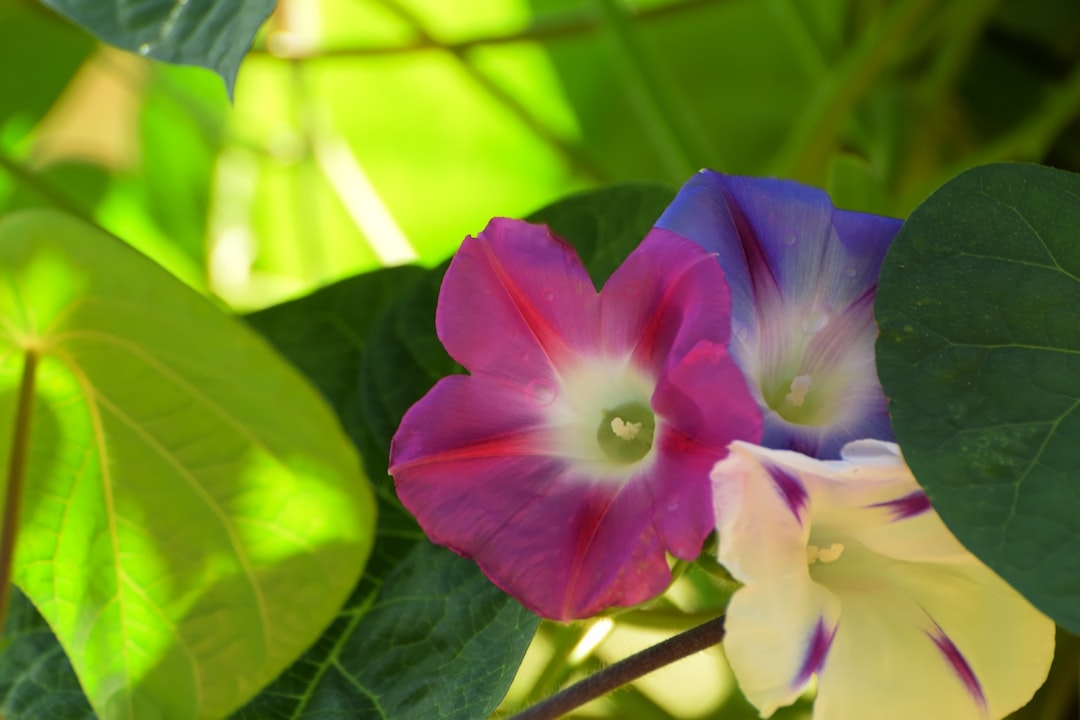
Once morning glories start flowering — usually opening fully between 5 a.m. and 8 a.m. and closing by early afternoon — the show continues until the first hard frost. In Zones 6–7, that’s typically a solid 10–14 weeks of continuous bloom from July through October.
To extend that season:
- Water deeply but infrequently — once or twice a week rather than daily shallow watering.
- Don’t deadhead. Unlike many annuals, morning glories bloom just as prolifically without deadheading, and removing spent flowers means losing next year’s seeds.
- Provide at least 6 hours of direct sun daily. Less than that and bloom count drops noticeably.
- Once nights drop below 50°F consistently, blooming will slow. This is normal — not a nutrient problem.
Frequently Asked Questions About Morning Glory Blooming
How long does it take for morning glories to bloom after planting?
Morning glories typically take 60 to 90 days from seed to first bloom, depending on variety, soil temperature, and sunlight. Scarifying seeds and planting in warm soil (above 64°F) reduces that time.
Why are my morning glories not blooming?
The most common causes are: too much nitrogen fertilizer (which promotes leaves over flowers), insufficient sunlight (less than 6 hours daily), or planting too early before soil warmed up. Morning glories also naturally delay blooming until midsummer due to their short-day photoperiod requirements.
Do morning glories bloom all summer?
Yes, once established, morning glories bloom continuously from midsummer through the first fall frost — usually a 10 to 14-week bloom window in most US zones.
What month do morning glories bloom?
In most of the US, morning glories begin blooming in July, with peak flowering in July and August. In warmer zones (9–10), blooms can start as early as late June.
Can I start morning glories indoors to get earlier blooms?
You can, but with caution. Start seeds indoors no more than 4 weeks before your last frost date. Morning glories dislike transplanting — use biodegradable peat pots you can plant directly into the ground to avoid disturbing roots.
Plan Now for a July Payoff
The gardeners who get the most spectacular morning glory displays aren’t the ones with the greenest thumbs — they’re the ones who plan backwards from their target bloom date. Pick your variety, check your zone’s last frost date, count back 65 to 80 days, and mark that planting date on your calendar now. Nick those seeds, find the sunniest fence or trellis you have, and resist the urge to fertilize heavily.
By the time your neighbors are buying cut flowers from the farmers market in July, you’ll have a living wall of blooms that opens fresh every single morning — and a bag of seeds ready for next year already forming on the vine.