Contents:
- Why Mums Are the Workhorses of Fall Gardens
- The Ideal Plant Mums Fall Blooms Timing by Region
- Seasonal Timeline: A Month-by-Month Planting Calendar
- What Happens When You Plant Too Late
- Choosing the Right Variety for Your Bloom Goals
- Top Varieties by Bloom Timing
- Practical Planting Tips for Maximum Fall Color
- Mums for Fall Events: Planning With a Deadline in Mind
- Frequently Asked Questions
- When is the best time to plant mums for fall blooms?
- Can I plant mums in September and still get blooms?
- How long do mums bloom in fall?
- Do mums come back every year?
- Should I deadhead mums to extend blooming?
- Plan Now for the Fall Garden You’re Picturing
The air carries that first cool edge. Pumpkins are appearing on doorsteps, and the garden center is suddenly awash in burgundy, gold, copper, and white. Chrysanthemums — those dense, cheerful globes of color — are everywhere. But here’s where most gardeners make a costly mistake: they buy mums when they see them, not when they should plant them. And timing, as any seasoned horticulturist will tell you, makes all the difference between a fleeting two-week show and a full season of spectacular fall color. Understanding plant mums fall blooms timing is the single most important factor in getting the display you’re imagining.
Why Mums Are the Workhorses of Fall Gardens
Chrysanthemums have been cultivated for over 2,500 years, originating in China before becoming a staple of autumn gardens across the globe. In the United States, they’re the top-selling potted flowering plant, generating over $100 million in annual retail sales. That popularity isn’t accidental. Hardy garden mums (Chrysanthemum × morifolium) are bred specifically to bloom in response to shortening daylight hours — a trait called photoperiodism — which makes them naturally synchronized with the fall season.
There are two distinct categories you’ll encounter at nurseries: florist mums, which are bred for indoor display and won’t survive frost, and garden mums, which are cold-hardy and designed for outdoor planting. If you’re planning a fall event, outdoor installation, or a perennial bed that returns each year, always choose garden mums. They’re rated hardy to USDA Zones 5 through 9 in most varieties.
The Ideal Plant Mums Fall Blooms Timing by Region
There’s no single universal planting date for mums — your geography determines your window. The goal is to give plants at least 6 weeks in the ground before your first expected hard frost, allowing roots to establish before the plant puts all its energy into flowering.
Seasonal Timeline: A Month-by-Month Planting Calendar
- Late May – June: Best window for gardeners in USDA Zones 5–6 (Midwest, Northeast, upper Mid-Atlantic). Planting this early encourages robust root development and often yields the most prolific bloom set in September and October.
- June – Early July: Ideal for Zones 6–7 (Mid-Atlantic, Central US, Pacific Northwest). Plants have time to establish through summer heat before shortening days trigger bloom.
- July – Mid-August: The target window for Zones 7–8 (Southeast, lower South, coastal areas). Heat-tolerant varieties like ‘Mammoth Red Daisy’ or ‘Igloo White’ perform best in these climates.
- August – Early September: Zone 9 gardeners (Southern California, Gulf Coast, Arizona) can plant into late summer. These regions experience milder falls, so late-season planting still allows adequate root establishment.
- Mid-September onward: Planting at this stage is risky everywhere. You may get color, but shallow roots make plants frost-vulnerable and bloom cycles are often truncated.
What Happens When You Plant Too Late
A mum planted in late September in Zone 6 is essentially a cut flower in a pot. The roots haven’t had time to anchor and absorb moisture efficiently, so the plant pushes every calorie into blooming — then collapses at the first frost. You’ll get perhaps 10 to 14 days of color before the display is over. Plant the same variety in June, and you can expect 6 to 8 weeks of fall bloom, with a strong chance the plant overwinters and returns the following year.
“Most people are buying mums as décor, not as plants,” says Dr. Renata Kozlowski, Ph.D., Extension Horticulturist at the University of Wisconsin-Madison. “There’s nothing wrong with that — but if you want longevity and a garden that performs year after year, you need to treat mums like any other perennial and get them in the ground before the summer solstice.”
Choosing the Right Variety for Your Bloom Goals
Not all mums bloom at the same time, even when planted on the same day. Chrysanthemum cultivars are classified as early-season (blooming in late August through mid-September), mid-season (mid-September through early October), and late-season (mid-October through November). For a fall event with a specific date, this distinction matters enormously.
Top Varieties by Bloom Timing
- Early bloomers: ‘Centerpiece’, ‘Ruby Mound’, ‘Coral Charm’ — ideal if you need color by Labor Day weekend.
- Mid-season: ‘Mammoth Yellow Quill’, ‘Will’s Wonderful’, ‘Harvest Bronze’ — peak color typically falls between September 20 and October 10.
- Late-season: ‘Sheffield Pink’, ‘Venus’, ‘Clara Curtis’ — these carry color well into October and sometimes November in warmer zones.
For a wedding, outdoor reception, or harvest festival with a fixed date, work backward from the event. If your event is October 5th, a mid-season variety planted in late June in Zone 6 will be at peak bloom right on schedule.
Practical Planting Tips for Maximum Fall Color
Even with perfect timing, poor planting technique can undermine your results. Follow these specifics for the strongest performance:
- Choose a full-sun location. Mums require a minimum of 6 hours of direct sunlight daily. Shade reduces bloom density by up to 40% and delays flowering.
- Amend the soil. Work 2 to 3 inches of compost into the top 12 inches of soil before planting. Mums prefer a soil pH between 6.0 and 6.5.
- Plant at the right depth. Set the crown of the plant at soil level — never deeper. Buried crowns are the leading cause of crown rot in garden mums.
- Water consistently. Mums need about 1 inch of water per week. They’re shallow-rooted and will wilt rapidly during drought, which stresses the plant and shortens bloom time.
- Pinch back early, stop by mid-July. Pinching growing tips until July 4th encourages bushy, compact growth and multiplies bud set. After July 15th, stop pinching — buds are beginning to form.
- Fertilize through summer. Use a balanced 10-10-10 fertilizer every 4 weeks from planting until early August, then switch to a low-nitrogen formula (like 0-10-10) to encourage blooming over leafy growth.
🌿 What the Pros Know
Professional landscape designers often “stage” mums by purchasing plants at different growth phases and rotating them into display beds as earlier bloomers fade. Buy a flat of early-season varieties for late August color, then swap in mid-season pots for October. This relay planting approach keeps beds continuously vibrant without replanting — and it’s how upscale hotel entrances and event venues maintain flawless fall displays throughout the season.
Mums for Fall Events: Planning With a Deadline in Mind
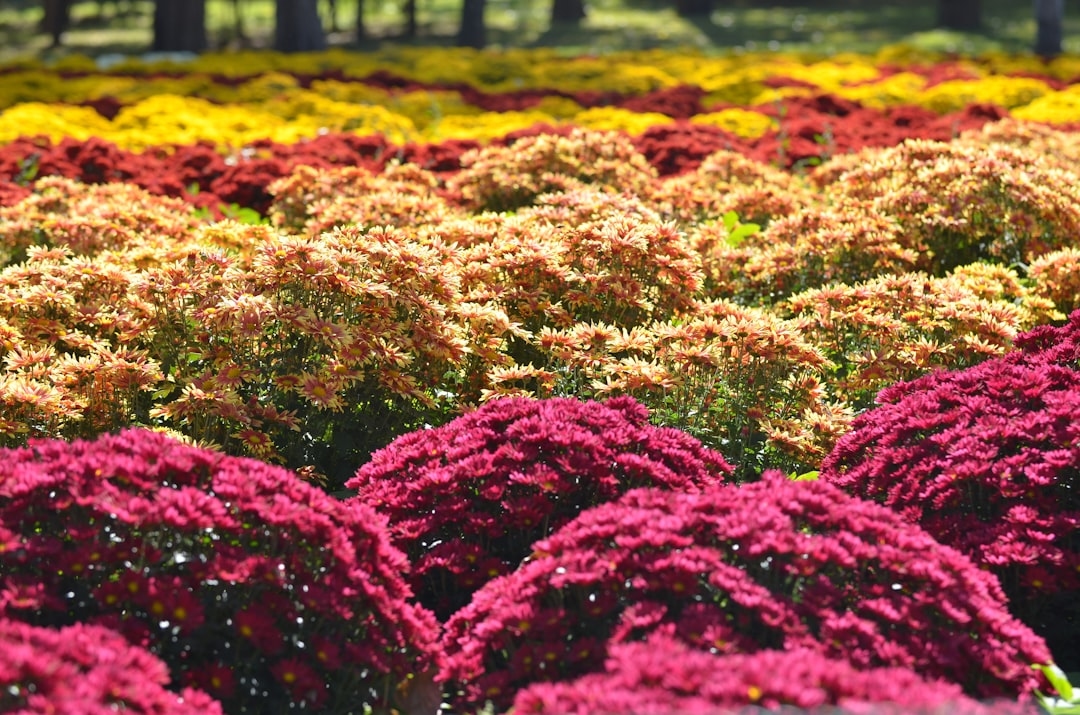
If you’re sourcing mums for a specific occasion — an outdoor wedding, a fall market, a corporate event — the calculus shifts slightly. Potted garden mums purchased from a reputable nursery in August are often already budded and will bloom within 2 to 4 weeks of purchase, giving you some deadline control. For large-scale installations (think 50+ plants), contact a local wholesale nursery or flower farm by June to reserve specific varieties and quantities. Retail garden centers typically stock what sells fastest, not necessarily what blooms on your preferred date.
Cut flower mums from a florist follow a completely different timeline — they’re greenhouse-forced and available year-round regardless of outdoor conditions. For arrangements, centerpieces, or bouquets, your florist can source standard or novelty chrysanthemum varieties with 1 to 2 weeks’ notice. Prices for cut mums typically range from $8 to $18 per bunch wholesale, with retail markup bringing stems to $3 to $6 each at most flower shops.
Frequently Asked Questions
When is the best time to plant mums for fall blooms?
The best time to plant mums for fall blooms is between late May and mid-July, depending on your USDA hardiness zone. Gardeners in Zones 5–6 should plant by late June; those in Zones 7–9 have until mid-August. Earlier planting means stronger roots, longer bloom periods, and better chances of the plant returning as a perennial the following year.
Can I plant mums in September and still get blooms?
Yes, but with caveats. Mums planted in September will bloom, but the display typically lasts only 1 to 2 weeks before frost ends the season. The plants are unlikely to overwinter successfully since roots haven’t had time to establish. Think of September-planted mums as seasonal decoration rather than garden investments.
How long do mums bloom in fall?
Garden mums planted at the right time typically bloom for 4 to 8 weeks. The exact duration depends on variety, weather, and care. Cooler temperatures extend bloom life; warm fall weather shortens it. Nights consistently below 50°F slow blooming but also preserve open flowers longer on the plant.
Do mums come back every year?
Hardy garden mums (Zones 5–9) can return as perennials when planted early enough to develop strong root systems. Mums planted before July 1st in Zone 6 have approximately a 70% survival rate through winter with proper mulching. Apply 3 to 4 inches of straw or shredded leaves after the first hard frost to insulate the crown.
Should I deadhead mums to extend blooming?
Deadheading — removing spent flowers — can modestly extend the bloom period by redirecting the plant’s energy away from seed production. Snap off faded blooms at their base. This won’t produce a second flush of flowers, but it keeps the plant looking tidy and may add an extra 1 to 2 weeks of color to mid-season varieties.
Plan Now for the Fall Garden You’re Picturing
The calendar works in your favor when you start early. Mark your planting window on the calendar now, order your preferred varieties from a reputable nursery before summer inventory sells out, and treat those mums as the intentional garden plants they are — not impulse purchases from a parking lot display. Whether you’re designing a perennial bed that evolves over years or planning the perfect backdrop for an autumn event, getting the plant mums fall blooms timing right is the move that separates a truly memorable display from one that’s gone before the leaves have fully turned. Your fall garden starts with decisions you make in spring and early summer — so start planning today.